|
|
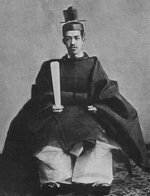
On December 25, 1926, upon the death of his father Yoshihito, he succeeded to the throne and was entitled Showa (Enlightened Peace). He was crowned emperor on November 10, 1928 in Kyoto. The new emperor had the distinction of being the first Japanese monarch in several hundred years whose biological mother was his predecessor's official wife.
The first part of Hirohito's reign as sovereign (between 1926 and 1945) took place against a background of increasing military power within the government, through both legal and extralegal means. The Japanese Imperial Army and Imperial Navy had held veto power over the formation of cabinets since 1900, and between 1921 and 1944 there were no less than 64 incidents of right-wing political violence, most notably the assassination of moderate Prime Minister Tsuyoshi Inukai in 1932. From that time on, the military clique held almost all political power in Japan, and pursued policies that eventually led Japan to fight the second Sino-Japanese War and World War II.
In the immediate aftermath of the war, many believed that the Showa Emperor was an evil mastermind behind the war while others claimed that he was simply a powerless figurehead. Many people in China, Taiwan, Korea and South-East Asia see Hirohito as Asia's Hitler of World War II, and some feel he should have been tried for war crimes. Because of this, many Asians residing in countries that were victims of Japanese aggression retain a hostile attitude towards the Japanese Imperial Family.
He was well known for his claim of divinity during World War II. According to the Japanese constitution of 1889, Hirohito had a divine power over his country, which was derived from the mythology of the Japanese Imperial Family who were the offspring of the creator of Japan or Amaterasu.
In 1946, he disavowed his divinity (in the so-called Ningen-sengen).
The Taisho period (大正 lit. Great Righteousness, 1912 - 1926) is a period in the History of Japan. The health of the new emperor was weak, which prompted the shift in political power from the old oligarchic clique of "elder statesmen" (genro) to the parliament and the democratic parties. Thus, the era is considered the time of the liberal movement known as the "Taisho democracy" in Japan; it is usually distinguished from the preceding chaotic Meiji Era and the following militarism-driven Showa Era.
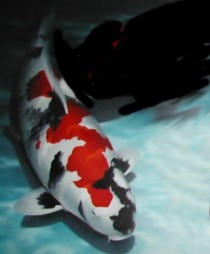
It was not until 1914 that the colored carp were seen outside of Niigata when a batch were sent to the Great Tokyo Exhibition, and some of these were made a gift to the Emperor Taisho's son. During the 1920's the Kohaku and Sanke became established, followed in the 1930's by the Shiro, Bekko, and Showa.